
A Complete Guide to Dental Implants
Missing teeth can affect more than your smile. Dental implants offer a long-term way to replace missing teeth while restoring the appearance, function, and confidence that come with a complete smile.
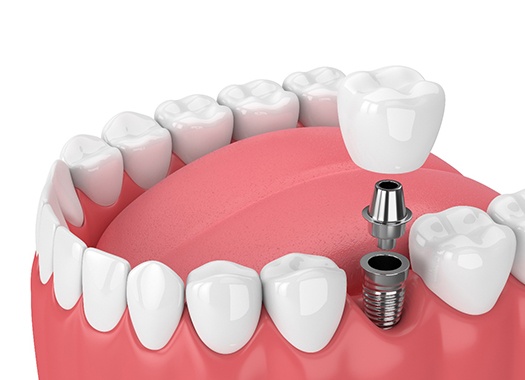
Dental implants have become a widely used option for replacing missing teeth. They are designed to replace the root portion of a missing tooth and provide support for a restoration above it.
Losing a tooth can affect more than the appearance of your smile. Missing teeth may influence how you chew, speak, and feel about your smile. Over time, the surrounding teeth and supporting structures can also be affected.
Dental implants provide one approach to replacing missing teeth by combining an implant with a custom restoration. Depending on your needs, treatment may be used to replace a single tooth, several teeth, or an entire arch.
If you are considering dental implants, understanding the treatment process can help you know what questions to ask and what to expect during a consultation.
What are dental implants?
A dental implant is a small post that is placed into the jawbone to act as an artificial tooth root. Once the implant has healed and integrated with the surrounding bone, it can support a dental restoration.
The visible portion of the replacement tooth is designed to resemble a natural tooth in appearance and function. Depending on the situation, an implant can support a crown, bridge, or implant-supported denture.
A typical implant restoration consists of three main components: the implant, an abutment, and the restoration. Together, these components create a replacement for the missing tooth or teeth.
Dental implant treatment is about more than filling a gap. Treatment is planned around the health, function, appearance, and long-term needs of your smile.
Why consider dental implants?
Every patient has different reasons for exploring tooth replacement. Some people are missing a single tooth, while others may have several missing or damaged teeth.
Depending on your individual situation, dental implants may offer several advantages.
Natural-looking results
Implant-supported restorations can be designed to complement the surrounding teeth and the overall appearance of your smile.
Restored function
Replacing missing teeth can help restore chewing function and provide support for a more complete bite.
Secure tooth replacement
Implant-supported restorations are designed to be securely supported rather than simply resting on the gums.
Flexible treatment
Implant treatment can be planned for a single missing tooth, multiple teeth, or a complete dental arch.
Who may be a candidate for dental implants?
Dental implants are not automatically the right treatment for every patient. A thorough examination is necessary to determine whether implants are appropriate for your situation.
Your dental team may evaluate your teeth, gums, jawbone, bite, oral hygiene, dental history, and overall treatment goals.
The only way to determine whether dental implants are appropriate for you is through an individual evaluation with a qualified dental professional.
Technology helps us plan with greater precision
Successful implant treatment begins with careful planning. Modern dental technology can provide detailed information about your teeth, jawbone, bite, and surrounding anatomy.
At Expert Dental Group, digital tools can be incorporated into the treatment-planning process when appropriate.
What does the dental implant process involve?
The exact implant process varies from patient to patient. Treatment may depend on the number of teeth being replaced, your existing bone structure, gum health, restoration type, and whether additional procedures are needed.
Consultation
Your dentist examines your oral health, discusses your concerns, and learns about your goals for treatment.
Treatment planning
Diagnostic information and digital records may be used to develop a treatment plan based on your individual needs.
Implant placement
The implant is placed into the jawbone using a treatment approach determined by your dental team.
Healing
The implant is given time to heal and integrate with the surrounding bone before the final stage of treatment.
Final restoration
Once the implant site is ready, the appropriate restoration can be created and attached.
Different types of implant treatment
Dental implants can be used in several different situations. Your treatment plan depends on the number of teeth that need to be replaced and the condition of your existing teeth, gums, and bone.
Single-Tooth Implants
A single implant can support an individual crown when one tooth is missing and the surrounding conditions are appropriate.
Multiple Implants
Several implants may be used to replace multiple missing teeth as part of a customized restorative plan.
Implant-Supported Dentures
Implants can provide additional support for certain denture solutions, depending on the patient's needs.
Full-Arch Treatment
Patients with extensive tooth loss may be candidates for implant-supported full-arch treatment.
What is recovery like?
Recovery following implant treatment varies depending on the procedure and the individual patient. Your dental team will provide specific instructions for caring for the treatment area.
Some patients experience temporary swelling, tenderness, or sensitivity following treatment. These effects can vary depending on the extent of treatment and individual healing.
Follow-up appointments are an important part of the process. They allow your dental team to monitor healing and determine when the next stage of treatment can move forward.
Dental implant treatment is a process, not simply a single appointment. Careful planning and follow-up are important parts of achieving a healthy, functional result.
How do you care for dental implants?
Dental implants still require regular professional dental care and consistent home hygiene. While the implant itself cannot develop a cavity, the gums and tissues surrounding the implant still need to remain healthy.
Brushing, cleaning between the teeth, attending regular dental visits, and following your dentist's recommendations are all important parts of maintaining your oral health.
Your dental team can also recommend specific cleaning methods based on your implant and restoration.
A personalized approach to implant dentistry
At Expert Dental Group, implant treatment is considered as part of the larger picture of your oral health, function, and smile goals.
Rather than using the exact same approach for every patient, treatment planning begins by understanding your current oral health and what you want to accomplish.
Digital diagnostic tools may be used to help evaluate your individual situation and develop a treatment plan that is appropriate for your needs.
Dental implant questions, answered
How long does dental implant treatment take?
Treatment time varies depending on the patient, the number of teeth being replaced, bone availability, healing, and the type of restoration being used.
Are dental implants right for everyone?
No. Implant candidacy depends on factors such as oral health, gum health, bone structure, dental history, and individual treatment goals. A professional examination is necessary.
Can implants replace multiple teeth?
Yes. Multiple missing teeth can sometimes be replaced using several implants and a customized restorative approach.
Can implants support a full arch?
Implant-supported full-arch treatment may be an option for certain patients with extensive tooth loss. Your dentist can determine whether this type of treatment is appropriate for you.
Do implants require special care?
Implants require regular brushing, cleaning between the teeth, professional dental visits, and ongoing maintenance.
How do I know which implant option is right for me?
The appropriate treatment depends on your oral health, number of missing teeth, bone structure, bite, smile goals, and overall needs. A consultation is the best way to determine your options.
Ready to learn more about dental implants?
The first step is understanding your individual needs. Schedule a consultation with Expert Dental Group in Roseville to discuss your smile, your goals, and the treatment options available to you.
Schedule a Consultation →This article is provided for general educational purposes and is not a substitute for an examination, diagnosis, or individualized treatment recommendation from a qualified dental professional. Treatment options and timelines vary by patient.